Plant on Pot Hand Drawing: A Flexible Visual Asset for Mixed-Media Projects
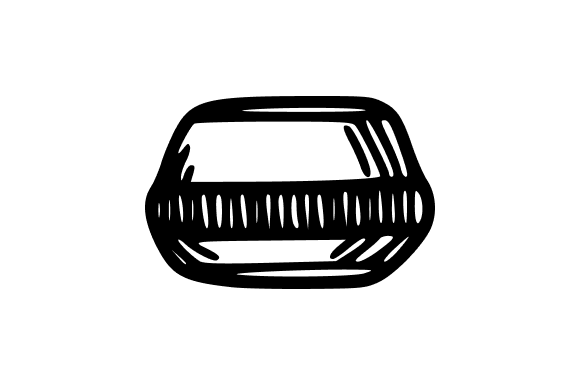
A plant on pot hand drawing brings an organic, human touch that stock photography and rigid geometric icons often miss. When brands, educators, or content creators want to soften a layout, add a welcoming botanical note, or suggest growth without glossy artificiality, this kind of illustration becomes a practical go‑to. The asset described here is delivered as a multi‑format bundle—SVG, EPS, JPG, and transparent PNG—making it immediately usable across a wide range of design tools and output types.
Digital artists, small business owners, and presentation designers frequently look for illustrations that feel personal but don’t demand hours of custom drawing. This package answers that need with a single subject rendered in a clean hand‑drawn style. It’s not a clip‑art collection, but a focused design element that can anchor a composition, support a message, or become part of a repeatable visual system.
What You Actually Receive: File Formats and Their Practical Roles
The bundle structure tells you a lot about how the creator expects the work to be used. Four formats cover the most common production scenarios a professional might face:
- SVG (Scalable Vector Graphics) – The most flexible format for web, app interfaces, and any project where crisp rendering at multiple sizes matters. SVG files are lightweight and can be styled with CSS or edited in vector software without quality loss.
- EPS (Encapsulated PostScript) – A stalwart for print professionals. EPS works reliably in older RIP workflows, sign making software, and dedicated illustration programs like Adobe Illustrator or CorelDRAW. It’s often the format commercial printers request when logos or artwork must scale to large dimensions.
- JPG – A standard raster image, ideal when you need a quick placeholder, a web‑size preview, or a static image for a slide deck where vectors aren’t supported. The JPG here is presumably high‑resolution, but being a raster it lacks the true resolution independence of the vector options.
- Transparent PNG – This is the workhorse for digital composites. With an alpha channel, you can drop the plant illustration onto any background—coloured blocks, photos, gradients—without a white box. It’s essential for layering in Canva, Photoshop, or even simple blog post headers.
Having all four formats in one folder removes the friction of converting or upscaling later. You pay once and use the asset in a web banner (SVG), an email signature (PNG), a printed flyer (EPS), or a social media post (JPG) without hunting for alternate versions.
Where the Hand‑Drawn Aesthetic Adds Measurable Value
The phrase plant on pot hand drawing immediately signals a departure from the ultra‑polished, geometric flat vector look that dominated the last decade. A hand‑drawn line art plant carries a different set of connotations: approachability, sustainability, creativity, and craftsmanship. In branding, that can translate to higher perceived warmth. For a coffee shop’s loyalty card, a therapist’s practice brochure, or a children’s educational PDF, the sketch‑like quality lowers the visual tone from corporate to conversational.
In presentation design, executives often struggle to make quarterly review slides feel human. A small, tastefully placed potted plant illustration next to a quote or a growth metric section can subconsciously reinforce the idea of nurturing progress. Because the style is understated, it doesn’t compete with data visualizations but sits harmoniously in the margin or as a section divider.
Infographic designers find botanical hand drawings particularly useful. When you need to illustrate concepts like “our roots,” “cultivate ideas,” or “organic growth,” a hyper‑realistic stock photo of a monstera can look out of place amid flat chart elements. A drawn plant bridges that gap, tying abstract ideas to a visual metaphor without breaking the infographic’s overall style.
Quality, Scalability, and Consistency Under Real Use
An illustration judged only at a small preview size might hide critical quality issues. With the vector formats included, the plant on pot hand drawing can be examined at 400% magnification. Clean anchor points, smooth curve handling, and closed paths matter a great deal when the image is blown up for a poster or a storefront window decal. Because this asset is offered as both SVG and EPS, designers can inspect and, if needed, fine‑tune the vector structure. A well‑constructed hand drawing retains its charm without introducing messy node clusters that make recolouring or resizing a chore.
Consistency across the file versions is another practical consideration. The transparent PNG should exactly match the vector version’s bounding box and line weight. Misalignment between raster and vector exports is a common headache in cheap bundles; a professional package keeps these identical. That means you can prototype a layout with the PNG in Canva, then swap in the SVG for final production with total confidence that the positioning won’t shift.
Colour flexibility is a hidden strength. Hand‑drawn plants are often delivered as black outlines, which means they adapt instantly to any brand palette. A marketer can change the stroke to the company’s sage green in one click, or apply a soft watercolour texture behind it. The line art works as a container for creative treatment rather than a prescriptive final statement.
How Different Professionals Put the Asset to Work
Bloggers and content creators regularly need featured images that feel bespoke but can be produced quickly. A blogger writing about mindfulness or home gardening might place the transparent PNG version over a soft pastel background, add the post title in an elegant serif font, and publish within ten minutes. The same illustration reused across multiple posts creates a visual signature without the fatigue that comes from seeing the same stock photo repeated across the web.
Small business owners who handle their own marketing benefit from a resource that doesn’t require a graphic design background. The PNG can be dropped directly into a Canva template for an Instagram story, while the JPG can sit in a newsletter header. Because it’s a single, cohesive subject—a plant in a pot—it’s easier for a non‑designer to place intuitionally than an abstract shape or a complex multi‑element scene.
Print designers working on event collateral, such as plant sale posters, farmers’ market flyers, or seed packet designs, will gravitate toward the EPS file. The crisp lines survive offset printing on uncoated paper, and the illustration can be combined with vintage typefaces or earthy colour palettes to build a complete look. Its simplicity leaves room for event details, prices, and sponsor logos without overcrowding.
Stickers, Merchandise, and Product Applications
The promotional use case is worth highlighting. Because the illustration is described as suitable for stickers, the vector version must hold up under the intense scrutiny of die‑cut sticker production. A smooth outline path with a clear outer silhouette makes it easy for a print shop to create a kiss‑cut sticker at any size, from two‑inch laptop decals to large window graphics. The warm, hand‑drawn style is also popular for small apparel prints, tote bags, and notebook covers. In these contexts, the plant on pot hand drawing acts as a subtle embellishment rather than a loud logo, which expands its appeal across age groups and tastes.
Practical Limitations and Honest Considerations
No single illustration covers every need. A hand‑drawn potted plant, no matter how charming, carries a specific personality. It fits brands that lean toward minimal, organic, creative, or community‑oriented identities better than it fits high‑tech, industrial, or ultra‑luxury sectors where photorealism and sharp gradients dominate. A fintech dashboard looking for a growth icon might need a more geometric, data‑driven symbol; the sketch style could feel out of place in that environment.
The asset is also a solitary figure—it’s not a set of multiple plant varieties or arrangement options. If your project needs a cohesive series of botanical illustrations (cacti, succulents, hanging plants, trees), you’ll need to source additional assets from the same artist to maintain stylistic consistency. However, for layouts that only need one strong, repeatable botanical element, that limitation is actually a strength: it forces visual restraint and prevents clutter.
Users working exclusively in presentation software like Google Slides or Keynote should note that vector SVG support is sometimes limited. The transparent PNG becomes the primary format there, and while it works beautifully, edge sharpness at very large projection sizes depends on the pixel dimensions provided. A check of the PNG’s native resolution before buying is wise, especially if the asset will fill a 16:9 slide at full screen.
Long‑Term Value in a Growing Visual Library
Seasoned creators tend to build a personal vault of reusable design elements that match their taste. A well‑executed plant on pot hand drawing becomes a staple, not a one‑time purchase. It can appear in annual reports, seasonal social media templates, membership cards, online course PDFs, and email onboarding sequences over the course of years. The initial cost is amortized quickly when you realize how many discrete projects benefit from one adaptable botanical mark.
The multi‑format delivery also future‑proofs the investment. As software trends shift, having both legacy EPS and modern SVG ensures you aren’t locked into a single editing ecosystem. Even a decade from now, vector files will remain usable, whereas a proprietary template or app‑specific asset might become inaccessible.
Making an Informed Decision for Your Project
If your visual communication regularly calls on themes of growth, nature, care, or simplicity, this asset deserves a spot in your toolkit. The key is to evaluate it against the specific texture of your brand voice. Review the hand‑drawn stroke quality: is it relaxed but not sloppy? Does the pot shape feel neutral enough to sit next to your typography? The answers will tell you whether it harmonizes or fights with your existing design language.
For marketing coordinators, the time saved is maybe the most compelling argument. Instead of commissioning a custom sketch or adjusting a stock vector that never quite matches the brief, you download a ready‑made, print‑tested, web‑optimized drawing. That frees creative energy for higher‑order decisions—messaging, layout rhythm, colour psychology—where human judgment matters most. In that sense, a small botanical hand drawing is not just decoration; it’s a practical tool that streamlines production without sacrificing personality.