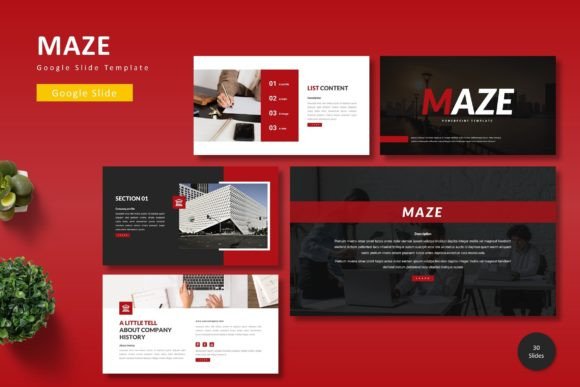
Maze - Google Slide Template: Redefining Presentation Design for the Modern Professional
In an era where visual communication dictates the speed of decision-making, the tools we choose to present our ideas matter more than ever. A cluttered slide deck can derail a pitch, while a thoughtfully structured one can elevate a simple concept into a compelling narrative. This is where the Maze - Google Slide Template enters the conversation—not merely as another design asset, but as a strategic resource for professionals who understand that form and function must coexist seamlessly. Built for Google Slides, this template offers a cohesive system of layouts, color schemes, and graphic elements designed to adapt across industries, audiences, and objectives.
The Growing Demand for Cohesive Visual Storytelling
Across sectors, the expectation for polished visual content has intensified. Whether you are a marketer presenting quarterly results, a founder pitching to investors, or an educator leading a workshop, your slides carry the weight of your credibility. Audiences have grown accustomed to high-production media in their daily lives, and that standard now extends into conference rooms and virtual meetings. The Maze - Google Slide Template addresses this shift by providing a ready-made framework that feels intentional rather than templated. With 150 total slides across five premade color variations, the collection gives users the flexibility to maintain brand consistency while avoiding the repetitive look that often plagues single-theme decks.
What makes this particularly relevant today is the convergence of remote collaboration and asynchronous communication. Teams are distributed across time zones, and a slide deck often needs to stand on its own without a live presenter. This reality places a premium on clarity, hierarchy, and visual pacing—all of which the Maze template supports through its handcrafted infographics, section break slides, and pixel-perfect illustrations. The structure itself guides the viewer through a logical progression, reducing the cognitive load that poorly designed presentations can impose.
Why the Maze - Google Slide Template Stands Out in a Crowded Market
The marketplace for presentation templates is saturated, yet many options fall into the trap of prioritizing aesthetics over usability. A beautiful slide is worthless if it cannot accommodate the actual content a professional needs to include. The Maze - Google Slide Template sidesteps this problem by grounding its design in master slide architecture. This means every element—from text boxes to image placeholders—is anchored in a system that preserves consistency when edits are made. Users can drag and drop images into picture placeholders without disrupting the layout, and all graphics remain resizable and editable, giving even non-designers the confidence to customize without breaking the composition.
Another distinguishing factor is the inclusion of five distinct color schemes, each applied across 30 slides. This is not a superficial palette swap. The schemes are thoughtfully crafted to serve different moods and contexts—some leaning toward corporate minimalism, others offering a more vibrant, creative energy. For a freelancer who serves clients in multiple industries, this variety means one purchase covers presentations for a law firm one week and a wellness brand the next. The template adapts rather than demands conformity.
Changing Workflows and the Rise of Flexible Design Assets
Over the past several years, the boundaries between professional roles have blurred. Marketers design, designers write, and founders build their own pitch decks. This democratization of content creation has been both liberating and overwhelming. The expectation to produce high-quality visual materials often outpaces the training or time available to meet it. Assets like the Maze - Google Slide Template have become essential because they bridge the gap between ambition and capability. They provide a professional starting point that users can modify to suit their preferences without starting from a blank canvas.
Consider the practical example of a startup preparing for demo day. The founding team needs to communicate product functionality, market opportunity, traction metrics, and team credentials—all within a tight time limit. Using the gallery and portfolio slides included in the Maze template, they can showcase product screenshots and team photos in a clean, organized format. The handcrafted infographics allow them to visualize data without requiring advanced charting skills. The section break slides create natural breathing room between topics, helping the audience absorb information rather than drowning in it. This is not about decoration; it is about communication engineering.
The Intersection of Technology and Design Accessibility
Google Slides has matured into a formidable platform for presentation design, shedding its earlier reputation as a lightweight alternative to desktop software. Today, it supports real-time collaboration, version history, and a growing library of add-ons. The Maze - Google Slide Template is optimized for this environment, meaning users can share a link, invite collaborators, and see changes reflected instantly. For teams that operate within the Google Workspace ecosystem, this integration is seamless. The template is delivered via Google Slides files within organized folders, complete with a Readme First document and notes on font and photo information. This attention to onboarding detail reduces the friction that often accompanies template adoption.
There is also a broader cultural shift toward valuing time over exhaustive customisation. Professionals are increasingly willing to invest in pre-built assets that accelerate their workflow, recognising that the cost of a template is negligible compared to the hours saved in layout adjustments and alignment tweaks. The pixel-perfect illustrations and master slide foundation of the Maze template mean users spend less time fighting with formatting and more time refining their message—an allocation of effort that directly improves outcomes.
Practical Applications Across Roles and Industries
The versatility of the Maze - Google Slide Template becomes apparent when you examine specific use cases. For a marketing professional, the template can structure a campaign proposal with dedicated slides for competitive analysis, audience personas, content calendars, and performance forecasts. The consistent visual language across these sections reinforces professionalism and makes the document easier for stakeholders to review.
An educator or trainer might use the 30-slide structure per color variation to build modular lesson presentations. The infographic slides can transform dense information into digestible visuals, improving retention for learners. Because the graphics are editable, instructors can adapt diagrams to match their curriculum without compromising design quality. This adaptability extends to nonprofit organisations, where limited budgets often mean staff wear multiple hats. A single template can serve for donor presentations, program reports, and community outreach materials—each with a different color scheme to suit the context.
Freelancers and consultants, who often juggle multiple clients simultaneously, benefit from the template's organisational clarity. The drag-and-drop picture placeholders allow rapid customisation of portfolio and case study slides, while the pre-built layouts ensure that no matter how quickly a deck comes together, it never looks rushed. In a competitive landscape where perception can influence hiring decisions, this level of polish is a tangible advantage.
Connecting the Maze Template to Larger Developments in Presentation Culture
The popularity of templates like Maze reflects a maturation in how we think about presentations. A decade ago, slide decks were often an afterthought—a visual crutch for a speaker. Today, they are standalone artifacts that circulate via email, live in shared drives, and represent brands long after the meeting ends. This shift demands a design approach that is both durable and flexible. The Maze - Google Slide Template embodies this duality. Its 150 total slides across multiple themes provide enough variety to avoid monotony, while the unified design language ensures that every deck feels cohesive.
Furthermore, the template aligns with the growing emphasis on ethical and sustainable design practices. By purchasing a well-constructed template, professionals reduce the cycle of reinvention that leads to wasted time and inconsistent results. The editability of every element means the template can evolve alongside a brand or individual, extending its useful life far beyond a single presentation. This is design with longevity, not disposability.
It is also worth noting the aesthetic direction that Maze represents. Clean lines, thoughtful whitespace, and restrained color accents appeal to contemporary sensibilities without chasing fleeting trends. The pixel-perfect illustrations and infographics draw from a visual vocabulary that emphasises clarity over decoration—a principle that serves any subject matter, from financial modeling to creative brainstorming. In an age of information overload, the ability to present with restraint is itself a competitive edge.
Making an Informed Choice About Presentation Tools
Choosing a presentation template is ultimately a decision about how you value your time, your audience, and your message. A free, generic template might seem economical, but the hidden costs—in alignment struggles, inconsistent formatting, and missed opportunities to impress—accumulate quickly. The Maze - Google Slide Template positions itself as a considered alternative: a comprehensive system designed with the understanding that great presentations are built, not merely decorated.
The inclusion of five PPTX items alongside the Google Slides files adds a layer of cross-platform flexibility, acknowledging that not every user operates exclusively within one ecosystem. The detailed documentation about fonts and photo information speaks to a developer that respects the user's need for clarity and support. These details, while small in isolation, collectively signal a product built for professionals who notice the difference between something that simply works and something that works beautifully.
As the boundaries between design, communication, and technology continue to dissolve, the tools we choose will increasingly define the quality of our output. Templates like Maze do not replace creativity—they provide the foundation upon which creativity can flourish without being encumbered by technical friction. For the professional who presents to persuade, educate, or inspire, that foundation is not a luxury. It is a necessity.